Projects
Selected work across Africa's development landscape
From livelihood assessments in arid Kenya to regional evidence reviews, our work spans sectors, geographies and development challenges.
Sector
Livelihoods & Food Systems
Region
Turkana, Marsabit, Wajir — Kenya
Duration
2024 – 2025
Livelihood Diversification Programme — Arid and Semi-Arid Counties
01Provided end-to-end MEAL support and evidence generation for a livelihood diversification programme targeting 8,000 households in three arid counties. The assignment included baseline assessments, theory of change development, a midline evaluation, and a final outcome study.
Key outcomes
- Delivered a robust baseline covering 1,600 households across four livelihood typologies
- Developed a validated theory of change and performance monitoring framework
- Conducted a midline evaluation identifying critical adaptation needs
- Produced a final outcome study with policy recommendations for programme scale-up
Services delivered
Sector
Gender & Economic Empowerment
Region
Sub-Saharan Africa
Duration
2025
Women Employment Evidence Review — Sub-Saharan Africa
02Conducted a rigorous systematic review of women's employment and economic empowerment programmes across 14 countries in Sub-Saharan Africa, synthesising evidence from 78 evaluations and studies to inform a new grant strategy focused on advancing gender equality in labour markets.
Key outcomes
- Reviewed and synthesised evidence from 78 programme evaluations and studies on women's employment
- Identified effective programme design features and gender-responsive contextual enablers
- Produced a strategic evidence brief to inform a $20 million women's economic empowerment grant programme
- Delivered a stakeholder workshop to validate findings with regional gender and employment experts
Services delivered
Sector
Agriculture & Gender
Region
Western Kenya
Duration
2025
Gender-Inclusive Agriculture Programme Design — Kenya
03Supporting the design of a gender-transformative smallholder agriculture programme targeting 15,000 women farmers in Western Kenya. The assignment includes gender analysis, theory of change facilitation, indicator design, and technical advisory.
Key outcomes
- Completed a gender analysis across five target counties
- Facilitated co-design workshops with 120 community stakeholders
- Developed a gender-sensitive theory of change and results framework
- Providing ongoing technical advisory during programme inception
Services delivered
MEAL Capacity Building — Civil Society Organisations
CompletedDesigned and delivered a six-month MEAL capacity building programme for 15 civil society organisations in Kenya, covering research methods, data quality, results reporting, and learning practices.
Field work across Kenya
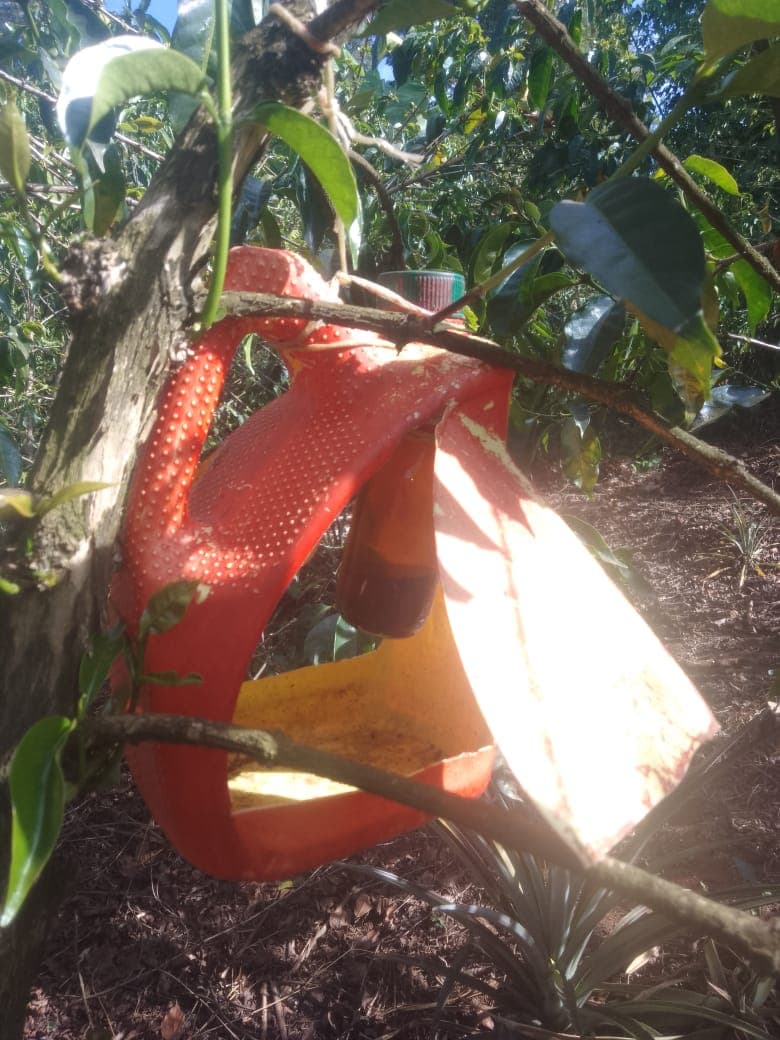
Nyeri County: Integrated Pest Management — The farmer places molasses or alcohol in a small bottle as a fermented attractant. Pest insects are drawn to the scent, enter the bottle, and fall into the larger water-filled container where they drown. A chemical-free, low-cost method widely adopted by smallholder farmers in Central Kenya.
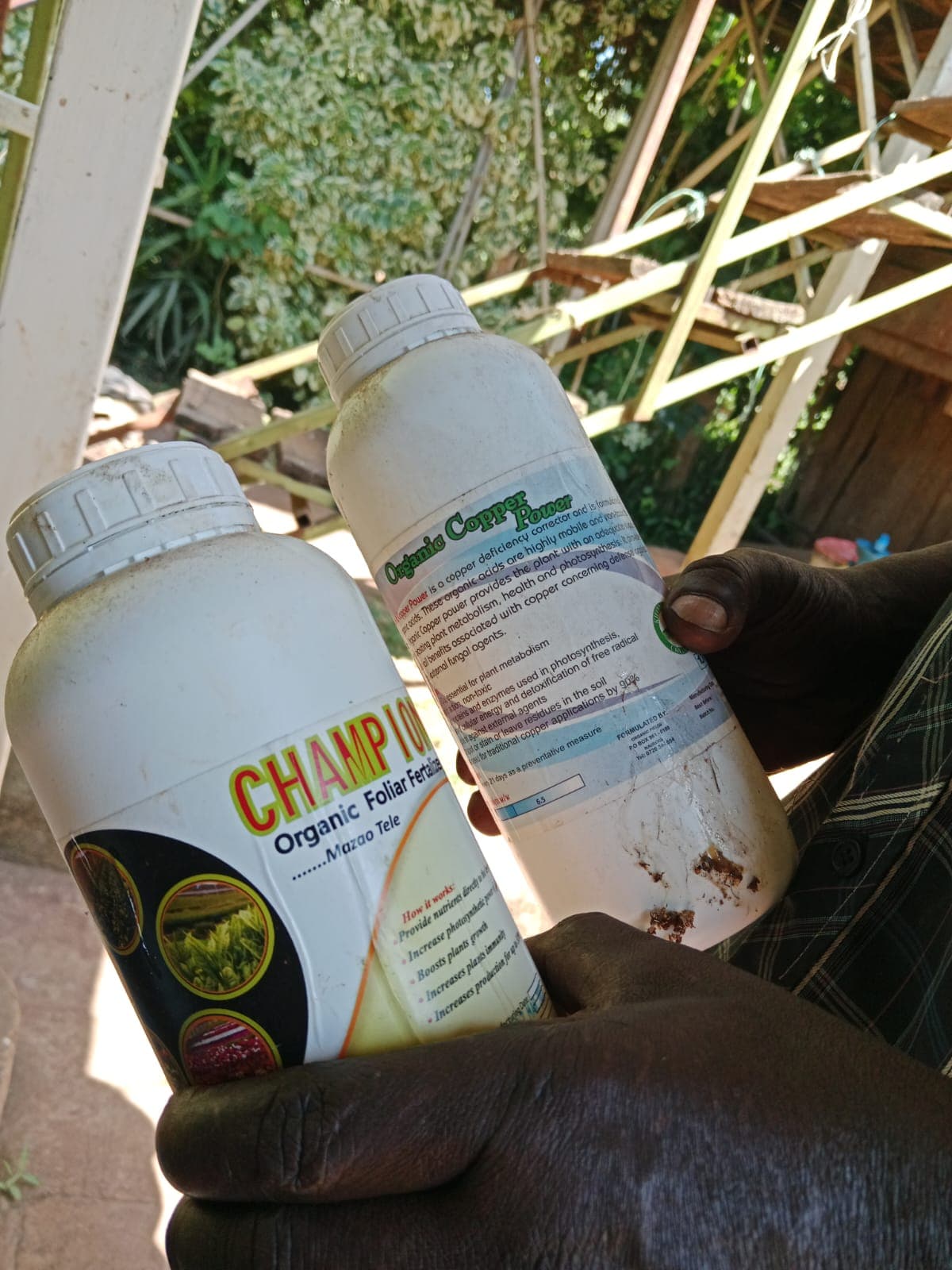
Nyeri: organic fertilizer and pesticide.
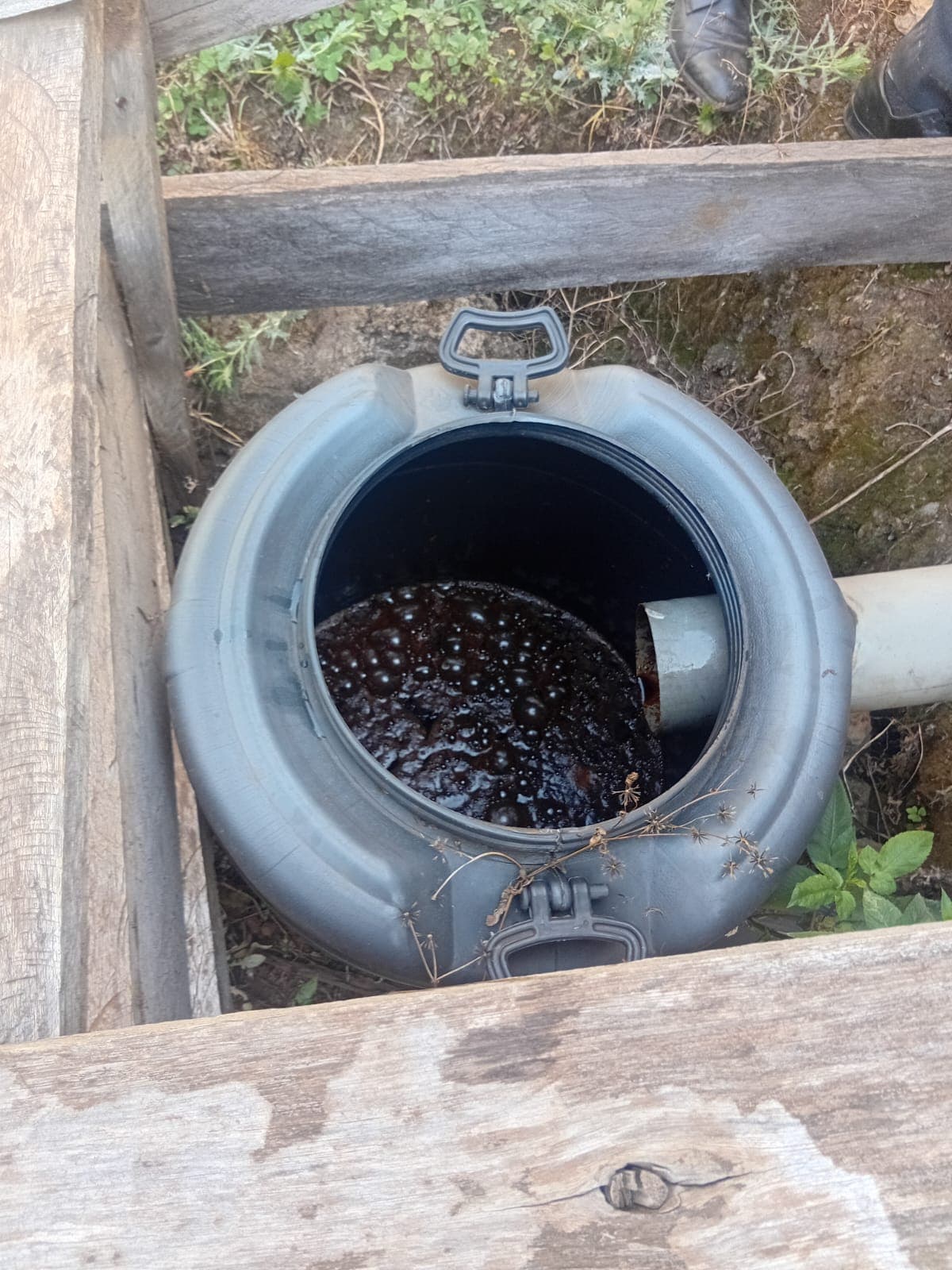
Kathangaririri, Tharaka Nithi County — vermiculture unit producing organic manure.
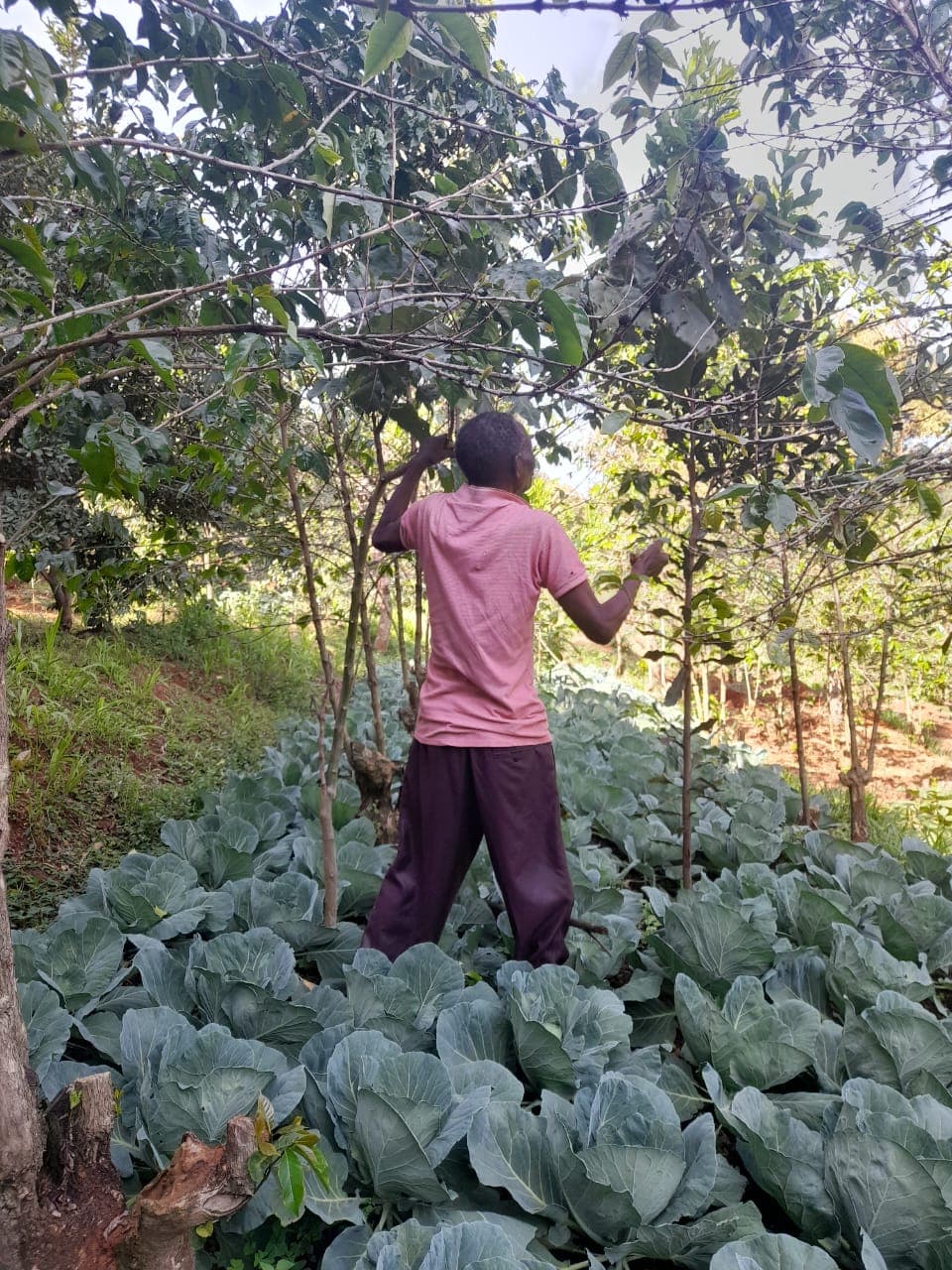
Embu County: Intercropping coffee and vegetables.
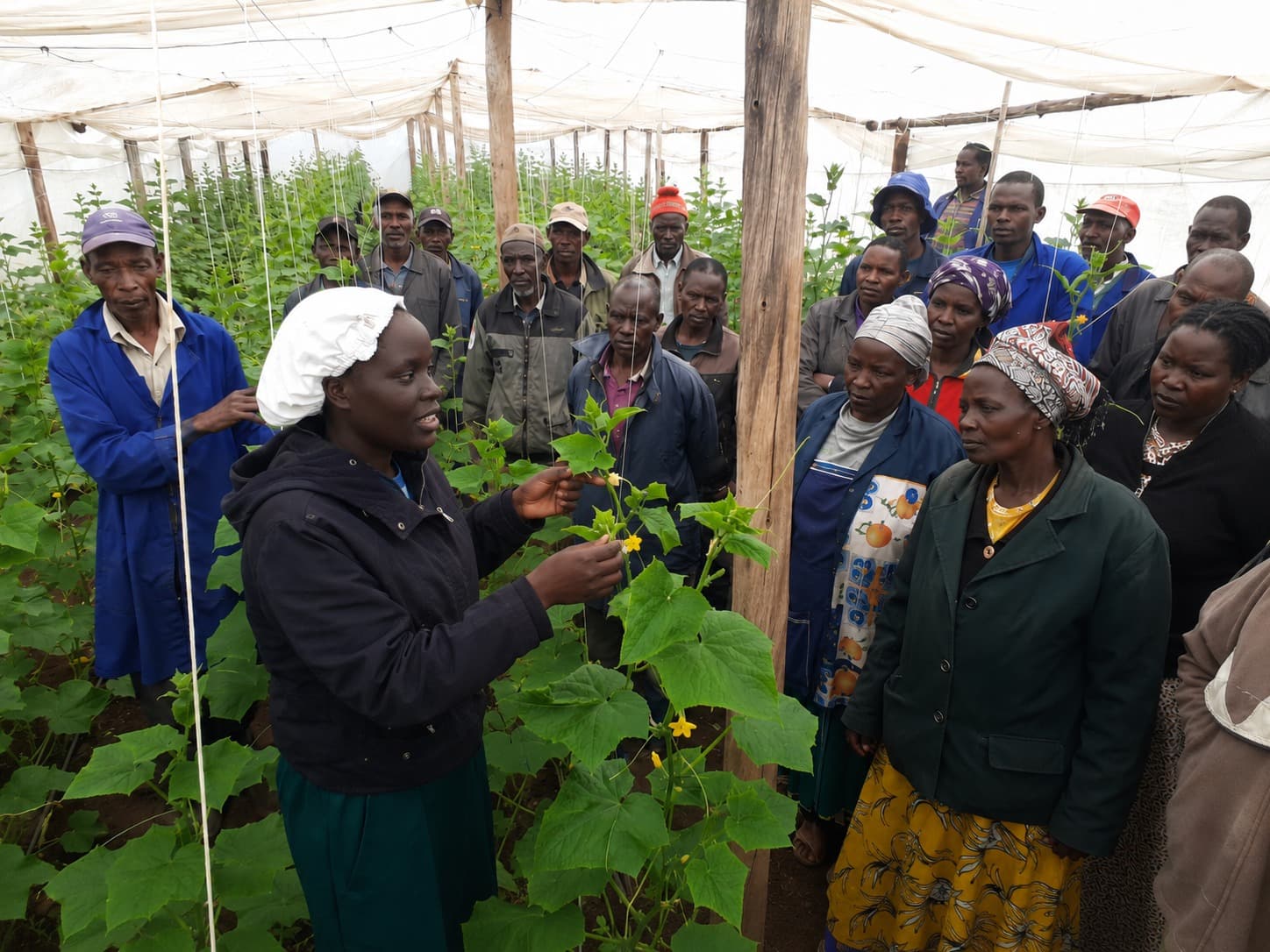
Inside a greenhouse in Njoro Subcounty, Nakuru County, Livelihood Lab Africa works with smallholder farmers to strengthen practical skills in cucumber farming. This training focused on trellising, pruning, pest and disease monitoring, irrigation, crop nutrition, and harvesting practices that help farmers improve cucumber yields, reduce losses, and build more resilient livelihoods.
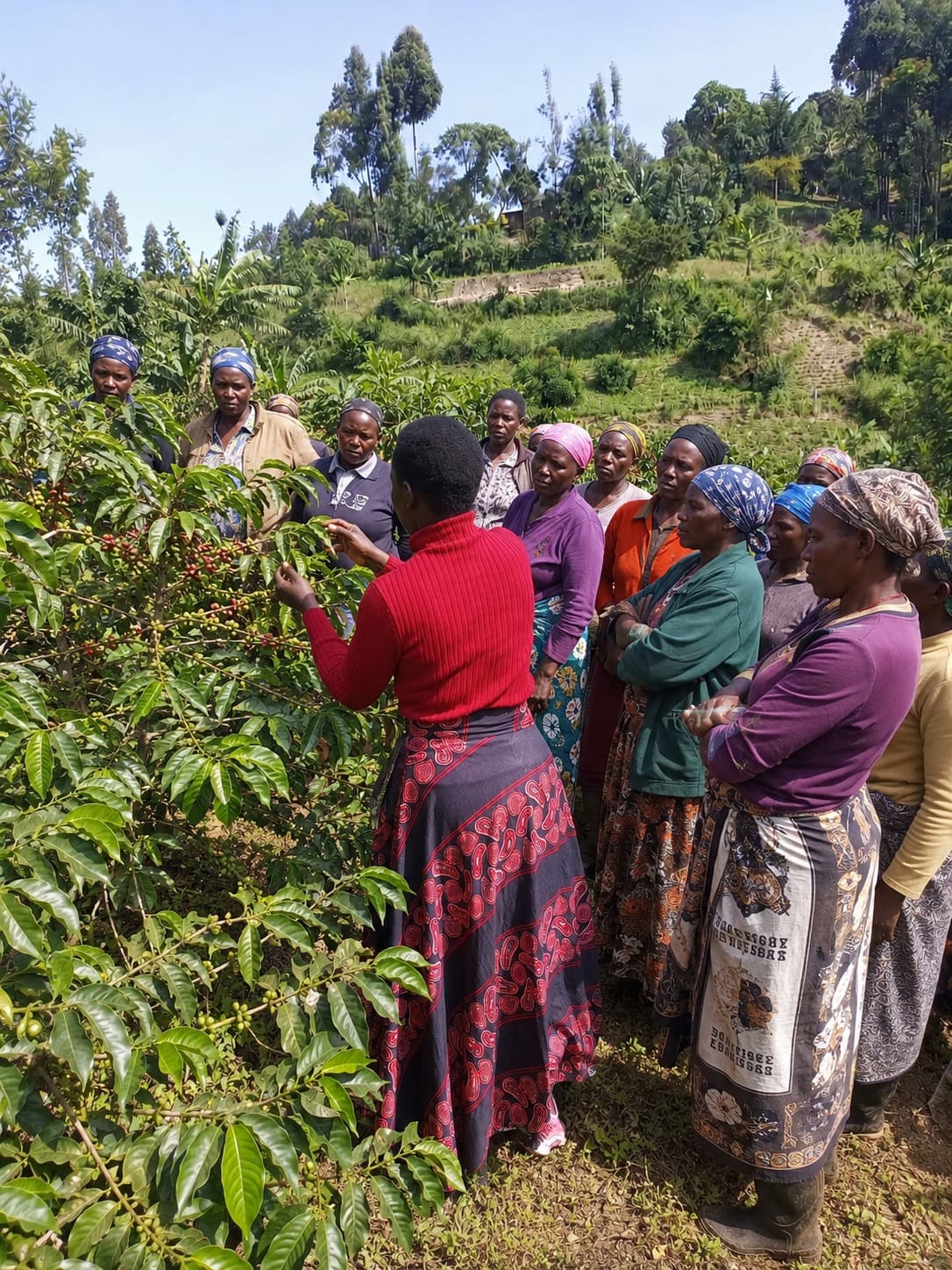
In Nandi County, Livelihood Lab Africa empowers women farmers through hands-on coffee production training that builds their technical skills, confidence, and participation in the coffee value chain. Using practical field demonstrations, women learn improved coffee husbandry, crop care, pest and disease management, soil fertility practices, and good agricultural practices that enhance productivity, improve coffee quality, and strengthen household incomes. By equipping women with practical knowledge and decision-making skills, the training supports their role as key actors in sustainable agriculture and community livelihood transformation.
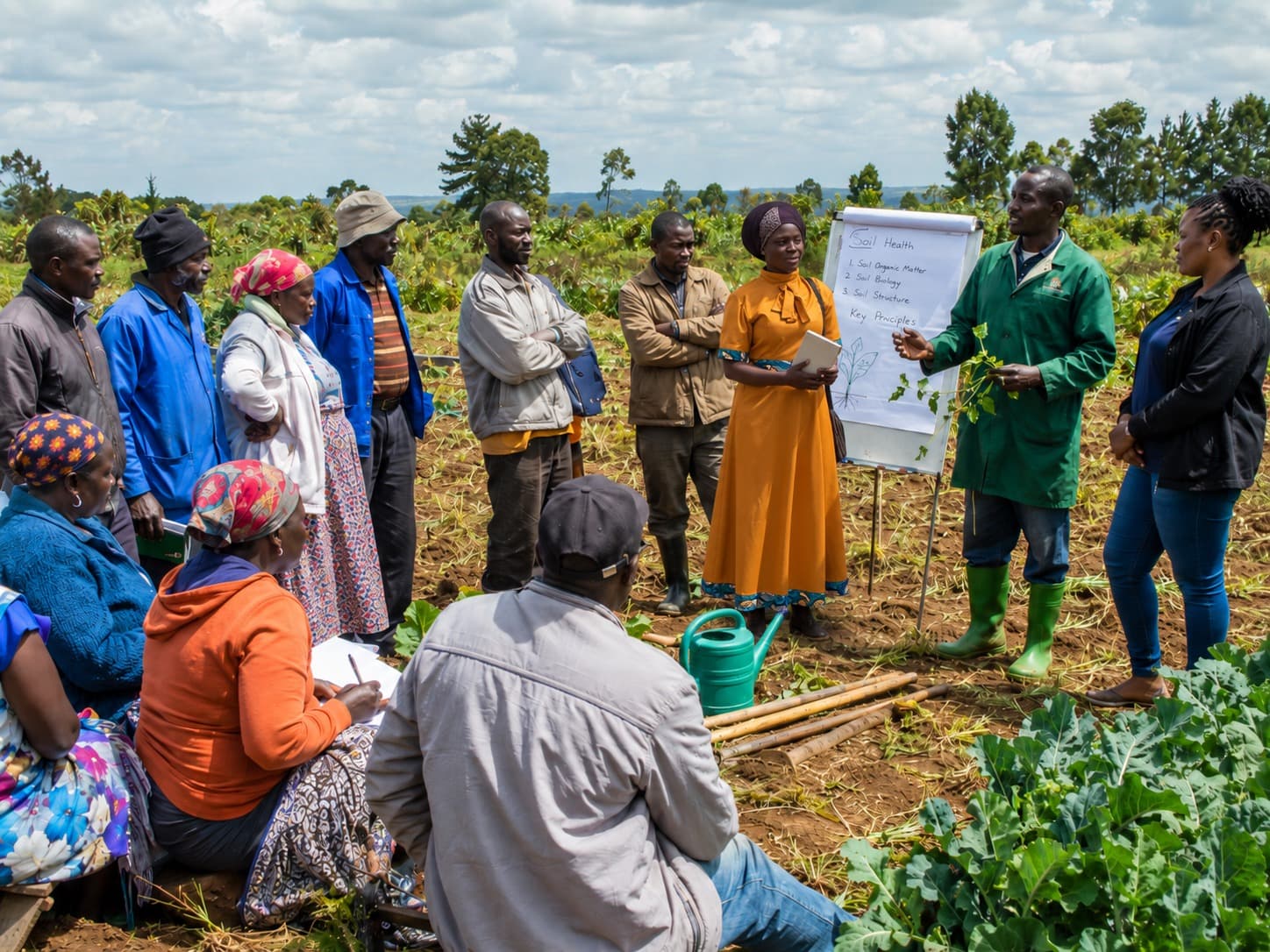
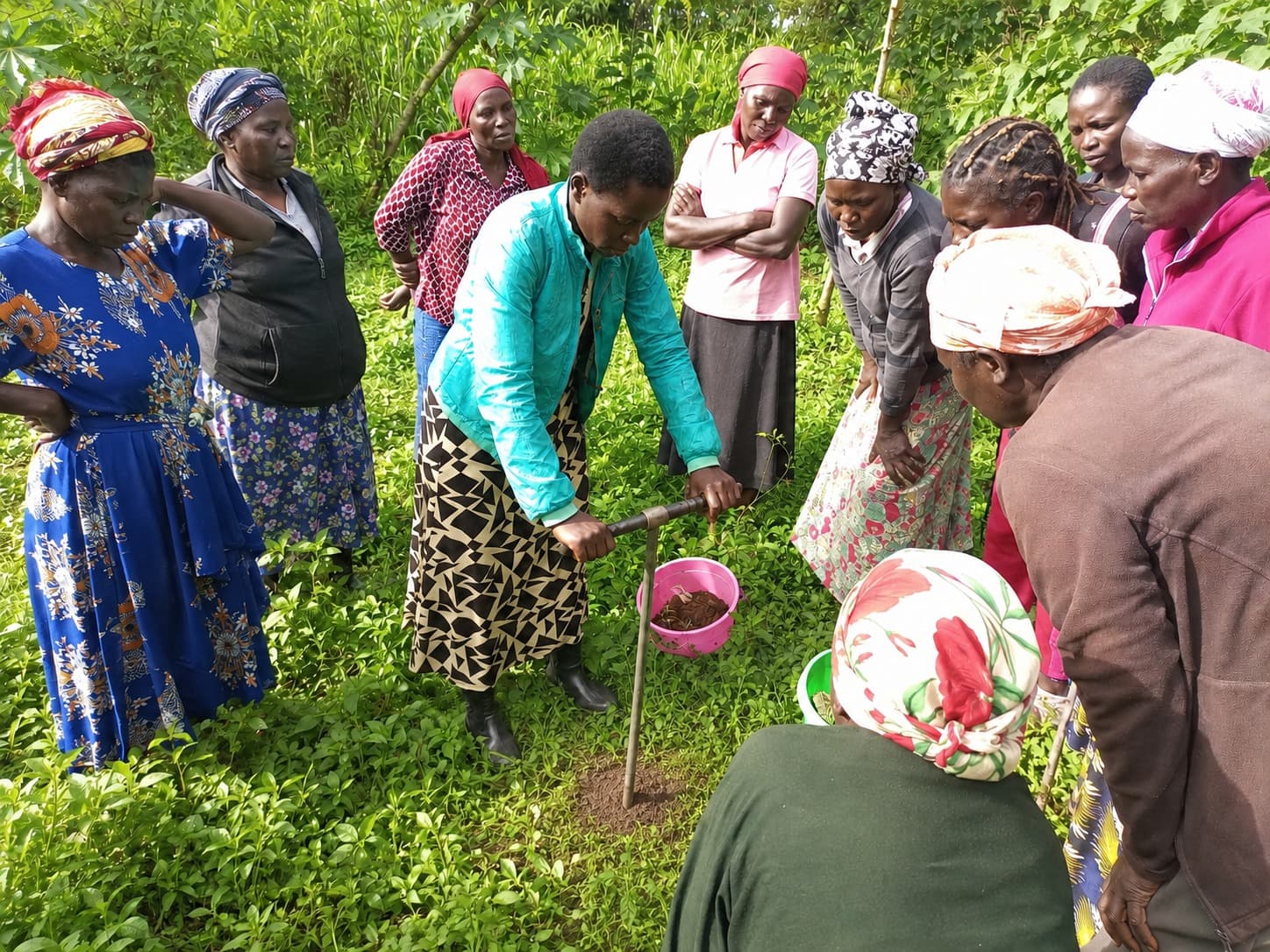
Through hands-on field demonstrations, Livelihood Lab Africa is empowering women farmers with practical skills in soil sampling, soil fertility management, and sustainable land use. By strengthening women's access to agricultural knowledge, the training supports improved productivity, better decision-making, and more resilient livelihoods. Farmers are then trained on practical soil management practices such as compost use, balanced fertilizer application, cover cropping, crop rotation, mulching, and good agronomic practices suited to their local farming conditions.
Livelihood Lab Africa facilitators train smallholder farmers in Western Kenya on soil health, climate-smart agriculture, and sustainable crop management through practical field-based demonstrations.
We approach every project as a partnership. Our teams embed alongside clients to understand context, co-design approaches, and ensure findings are practically useful — not just technically correct.
Discuss a project with us →Start a conversation
Let's build evidence-based solutions together
Whether you are looking for a research partner, an evaluation team, strategic advisory or capacity support — we would welcome the opportunity to discuss your needs.
Or email us at llabafrica009@gmail.com